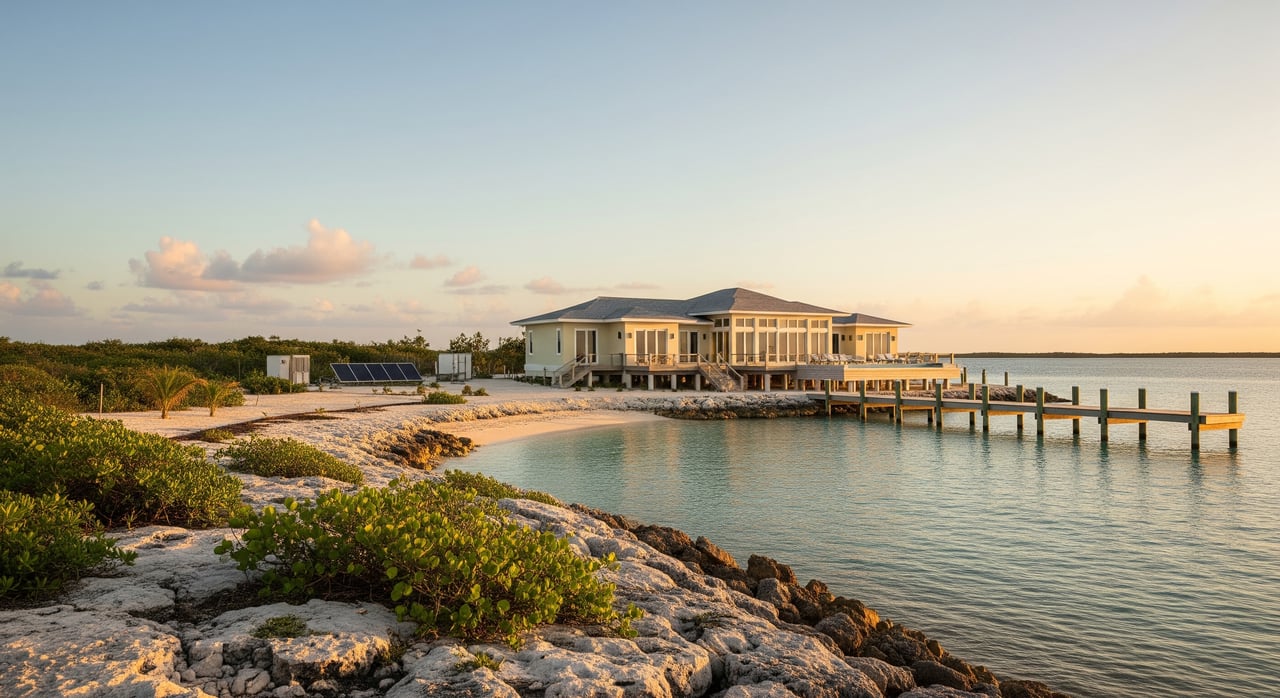
Thinking about building your island home on Staniel Cay? You are not alone. The Exuma Cays are stunning, but remote construction takes planning, patience, and the right team. In this guide, you will learn the permits you need, utility choices that work on small cays, and realistic timelines you can count on. You will also see how the same steps apply to nearby Black Point in the Exuma district. Let’s dive in.
Start with land and site checks
Before you sketch a floor plan, confirm your land status. Title in The Bahamas can be private, leasehold, or Crown land. Your first move is a title search with the Registry of Lands in Nassau and a current survey that marks boundaries and the high-water mark. If you are buying, verify there are no encumbrances, rights of way, or Crown conditions attached to the parcel.
Walk the site with your architect or surveyor. Note shoreline setbacks, elevation, and any sensitive habitats such as mangroves or seagrass. Check how materials will reach the lot by barge or boat and whether there is a usable dock or safe beach landing. Early due diligence reduces surprises later.
Permits and approvals
Most approvals on Staniel Cay and in Black Point flow through national agencies, with local support from the Exuma District Council. Plan your sequence to avoid delays.
Pre-application due diligence
- Confirm title and obtain an updated boundary and topographic survey.
- Complete a preliminary site assessment for setbacks and elevation.
- Discuss the concept with the Department of Physical Planning and the local council to confirm requirements.
Planning permission or Development Order
You will submit site plans, elevations, and a description of works to the Department of Physical Planning. Coastal or shoreline work often requires a Development Order. Typical requirements include a site plan, proof of title, topographic information, and drainage details.
Environmental reviews
If your project is near mangroves, dunes, coral, or turtle nesting areas, expect an environmental screening. Some sites trigger a full Environmental Impact Assessment with public consultation. Any dock, seawall, or dredging needs separate coastal permits from the marine authorities.
Building permit basics
You will need structural drawings stamped by a licensed Bahamian architect or engineer. Plans must address hurricane and wind loads, foundations, septic design, and stormwater drainage. Inspections are scheduled during construction at key stages such as foundation, framing, and final.
Other required approvals
- Septic system approval by Environmental Health Services.
- Electrical and generator inspections and approvals.
- Dock or pier permits for any foreshore works.
- Customs documentation for imported materials, heavy equipment, fuel, and vehicles.
How long approvals take
- Planning permission or Development Order: a few weeks to several months.
- Environmental screening vs EIA: screening is shorter; a full EIA adds several months.
- Building permit: typically weeks to a few months after planning approvals.
- End to end, pre-construction approvals often take 2 to 6 months for straightforward projects. Shoreline works or EIAs can extend timelines. Remote-island staffing, holidays, and logistics can add unpredictable delays, so build in buffer time.
Utilities and infrastructure options
Staniel Cay and Black Point have a mix of grid and private systems. Availability varies by parcel, so confirm details early.
Power
Some settlements have service from Bahamas Power and Light or local generation. Many properties rely on private systems. Your main options are a diesel generator, a solar PV system with batteries, or a hybrid setup that pairs solar and storage with a generator for backup. A hybrid approach improves reliability and reduces fuel costs.
Water
Rainwater harvesting into a cistern is the most common residential solution in the Exumas. You can supplement with trucked water or a small reverse osmosis unit. Plan for adequate cistern capacity, especially for the dry season, and add proper filtration and disinfection for potable use. Check with the Water and Sewerage Corporation about any public service options.
Sewage and wastewater
Public sewer is uncommon on small cays. Most homes use onsite septic systems permitted by Environmental Health Services. Where soil conditions make septic difficult, consider a compact treatment plant that meets approved discharge standards.
Telecoms and internet
Cellular service is provided by BTC and ALIV in many inhabited areas, but signal strength varies. Options include cellular broadband, fixed wireless where available, or satellite for consistent high bandwidth. Test coverage at your site and plan for a backup if you depend on remote work or security systems.
Waste and fuel
Plan construction debris removal and long-term household trash disposal. You may need barge transport to larger islands. For fuel, follow regulated storage practices, including bunded tanks and safe distances, and secure any needed local permits.
Timelines and milestones
A realistic schedule helps you stage design, procurement, and crews in the right order.
- Pre-purchase due diligence: 2 to 8 weeks.
- Permitting and approvals: 2 to 6 months, longer if an EIA is required.
- Procurement and logistics: 4 to 12 weeks or more for ordering, shipping to Exuma, and transshipment to Staniel Cay.
- Construction for a small to medium home: 6 to 12 months. Remote sites can run longer.
- Commissioning, inspections, and utility hookups: 2 to 8 weeks.
Tip: lock in logistics early. Know barge schedules, lead times, and customs documents before you commit to delivery dates.
Logistics and cost drivers
Understand the drivers that shape budgets and schedules on remote cays.
- Importation and freight: materials ship to Exuma and then by barge or boat to Staniel Cay. This adds time and cost.
- Labor availability: skilled trades can be limited. Flying crews from Nassau or elsewhere adds travel and accommodation costs.
- Storm-hardy construction: elevated foundations, reinforced frames, and hurricane-rated windows increase upfront cost but reduce long-term risk.
- Utilities strategy: solar plus batteries reduces fuel dependence but carries a higher initial cost than a generator-only system.
- Permitting delays: incomplete applications or environmental studies can stall progress for months.
- Customs duties and VAT: taxes can be significant. Clarify how duties apply to your materials before you finalize the budget.
Build the right team
Island projects succeed with a seasoned local team. At minimum, plan to engage:
- A licensed Bahamian architect and structural engineer for code and wind-load design.
- A contractor with Exuma Cays experience and a plan for on-island staging.
- A land surveyor to confirm boundaries and high-water mark.
- An environmental consultant for coastal or sensitive sites.
- A customs broker for imports and transshipment.
- A maritime or harbour engineer if you plan a dock or shoreline works.
If you are new to Staniel Cay or Black Point, introductions to trusted professionals save time and risk.
Practical checklist
- Verify title, updated survey, and any Crown or lease conditions before you buy.
- Request existing permits, surveys, septic, and utility approvals from the seller.
- Contact the Department of Physical Planning and the Exuma council for pre-application guidance.
- Commission a site and high-water mark survey before fixing the building footprint.
- Decide early on water, power, and septic systems. These choices drive layout and cost.
- Get quotes for freight, customs, and local labor to set a realistic budget.
- Discuss insurance requirements and any elevation or mitigation measures your insurer expects.
Next steps
Your path is clear: validate title, scope the site, and map out your permit and utilities strategy. Then sequence design, procurement, and logistics with buffer time. If you want curated local support, introductions to architects and engineers, and smooth transaction coordination, connect with My Bahamas Realtor Limited. Our team can guide you from site selection through post-sale coordination so you can focus on the lifestyle you want.
FAQs
Do I need an environmental study to build on Staniel Cay?
- Not always. Many small homes proceed with planning approvals and environmental screening, but sites with mangroves, dunes, coral, turtle nesting areas, or shoreline works often require a more detailed assessment.
What setbacks apply near the shoreline in the Exuma Cays?
- Shore and high-water mark setbacks are enforced. Exact distances depend on local planning policies and the coastline. Confirm requirements with the Department of Physical Planning before siting foundations.
Is grid power reliable on Staniel Cay and Black Point?
- Availability varies by parcel. Some areas have grid service or local generation, while many properties rely on generators or solar. Confirm current coverage and connection options with the electricity provider.
How do I move building materials to Staniel Cay from Nassau or Exuma?
- Materials typically ship to Great Exuma or Nassau, then transfer by barge or boat to Staniel Cay. Plan for added freight, handling, and longer lead times.
How long do permits take for a Staniel Cay home?
- Simple cases can be a few weeks to months. Projects with coastal works or environmental reviews can add several months. Allow contingency time in your schedule.
Can I install a private desalination unit for a Staniel Cay home?
- Yes. Many owners use small reverse osmosis units. Plan for proper siting, permits, power supply, and ongoing maintenance.
Who approves septic systems in Black Point and Staniel Cay?
- Environmental Health Services handles septic design approvals and inspections. Expect a percolation test and adherence to setback standards.