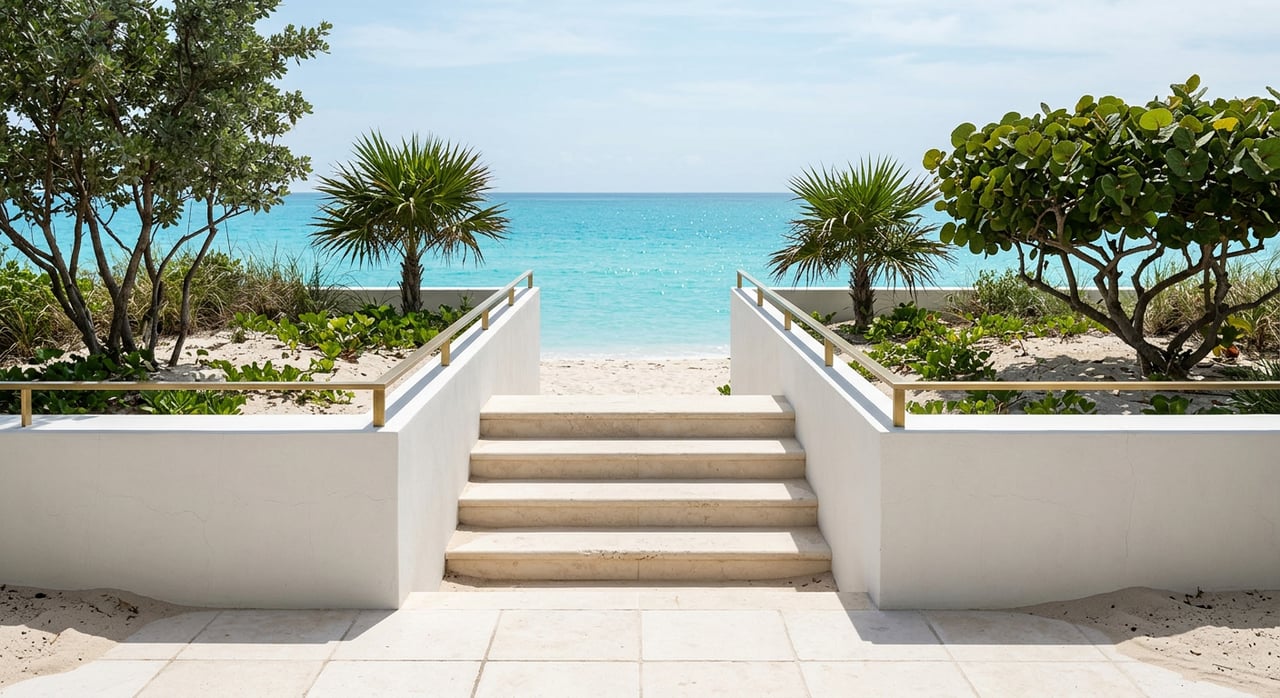
You can almost hear the surf from your future terrace, but buying oceanfront land on Long Island in The Bahamas takes more than a great view. You want a smart plan that protects your budget, your timeline, and your long‑term value. In this guide, you’ll learn how foreign ownership works, what closing costs to expect, the permits and studies coastal sites often require, and the due‑diligence steps that help you choose between raw land and a turnkey home. Let’s dive in.
Foreign ownership basics in The Bahamas
If you are a non‑Bahamian, your purchase is governed by the International Persons Landholding Act (IPLA). Many acquisitions can be registered after closing, but some require a prior permit. The most common trigger for a permit is when a non‑Bahamian acquisition involves undeveloped land that would give you two or more contiguous acres. In that case, expect a permit review rather than a simple registration. Review the Act’s registration vs permit framework in the International Persons Landholding Act.
The same statute outlines application requirements and fees for registration or permits. Your attorney will confirm which path applies to your parcel and will handle filings with the Investments Board.
Closing costs and taxes to budget
In The Bahamas, stamp duty is the main government transfer tax on conveyances. The Stamp Act was updated effective 1 July 2024, and the First Schedule sets a tiered ad valorem structure. Your attorney can calculate the duty on your deal using the Stamp Act, 2024 schedule and confirm who pays under your contract.
Expect Value‑Added Tax (VAT) on most professional services tied to your purchase, such as legal fees and brokerage commissions. Some buyers also budget for title search and registration costs, and any fees connected to Investments Board registration or permits. As a planning figure, many buyers allow roughly 8 to 12 percent of the purchase price for total closing costs, but your actual number will vary.
Timeline and process at a glance
- Negotiation and Agreement for Sale with a deposit held in trust.
- Attorney due diligence and title search, including verification of boundaries and encumbrances.
- Where applicable, apply for an Investments Board permit under the IPLA. Allow extra time if a permit or environmental review is likely.
- Pay stamp duty and lodge the conveyance for stamping and registration.
- Record the conveyance with the Registrar General and complete any post‑closing registrations.
Timeframes vary by island and by whether permits or studies are required.
Permits, planning and coastal rules
Planning consultation and required studies
Before you design or build, the Department of Physical Planning expects a pre‑submission consultation. The Planning and Subdivision Regulations list materials that may be required with an application, including site plans, servicing reports, geotechnical and soil studies, stormwater plans, and environmental impact assessments. Larger or coastal projects often trigger specialist studies. Review the application checklist in the Planning and Subdivision (Application Requirements) Regulations.
Building permits and controls
Construction requires a building permit. The Ministry of Works, working with the Department of Physical Planning, administers building approvals and inspections. Site works such as retaining walls or decks typically require permits too. The government’s procurement materials reference these approvals and the responsible authorities, which helps you understand the pathway for compliance; see the permitting context noted in a recent Government RFP document.
Environmental sensitivities on oceanfront sites
Bahamian coastal parcels can include mangroves, dunes, salt ponds, and reef ecosystems. These features are environmentally sensitive and often protected. Regulators commonly expect natural buffers to be preserved unless a management plan and mitigation are approved. For background on why these habitats matter, explore The Nature Conservancy’s overview of Caribbean mangroves.
Coastal setbacks are applied case by case through local planning reviews. Regional guidance for small islands often references setback distances measured from natural features, but in The Bahamas your exact setback is site‑specific and determined by authorities. For context on how coastal setbacks are evaluated in island settings, see this overview of managed realignment and coastal setback practice.
Infrastructure realities on Long Island
Compared with Nassau or Grand Bahama, Family Islands like Long Island have more limited public infrastructure. Plan for:
- Sewer: No central sewer in most areas. Septic tanks with soakaways are standard and require percolation testing and engineering sign‑off.
- Water: Many owners rely on rainwater capture with cisterns, private wells, or small local supplies. Confirm potable water options and any permits for wells or cisterns.
- Power: Grid access can be available, but extension costs and reliability vary by location. Hybrid solar plus generator systems are common.
- Internet/Cellular: Coverage and speeds vary by settlement. Check current service and consider redundancy if remote work is critical.
Your builder and attorney can help you verify connection distances, fees, and on‑site system requirements before you commit.
Site tests, resilience and insurance
Coastal limestone geology and hurricane exposure make early site testing essential. A geotechnical report, percolation tests for septic design, and an assessment of the freshwater lens if you plan a well help you avoid surprises. The planning checklist explicitly lists soil and geotechnical studies as potential requirements for applications; see the Planning and Subdivision Regulations.
For construction, ask your engineer about elevated floor systems, hurricane tie‑downs, impact protection for openings, and raised utilities. Building to higher wind and flood standards can influence both construction cost and insurance premiums. Insurers typically want engineered plans and code compliance. It is smart to secure at least two pre‑quotes during due diligence. For permitting context, refer to the approvals environment described in the Government RFP document.
Access, foreshore and survey essentials
Have your attorney confirm legal access to the property and whether any public rights of way or Crown land sit between the parcel and the beach. The title search and conveyance should reveal recorded easements, rights of way, or reservations. Ask counsel to verify the status of the foreshore and any maritime or public access reservations under the framework referenced in the IPLA. An up‑to‑date boundary survey by a licensed Bahamas surveyor is critical.
Raw land vs turnkey on Long Island
Buying raw oceanfront land can mean a lower entry price and the freedom to design a custom, resilient home tailored to your lifestyle. You control systems like solar, water capture, and elevation strategies. The trade‑offs are time, permitting complexity, infrastructure costs, and the need to manage island contractors.
Turnkey homes offer immediate use and often simpler closing logistics. You can enjoy the island right away and may generate rental income sooner, but you pay a premium and accept the seller’s design choices. On Long Island, value is shaped by access, proximity to air service, nearby resort or marina investment, vacation demand, and climate exposure. Your choice comes down to timeline, budget, and how hands‑on you want to be.
Your due‑diligence checklist
Use this list to structure conversations with your agent, attorney, and engineer:
- Title and boundaries
- Request a certified copy of the conveyance and a Registrar General title search for encumbrances or caveats. Confirm freehold vs leasehold vs any Crown lease.
- Require an up‑to‑date boundary survey by a licensed Bahamas surveyor and confirm any recorded rights of way or foreshore reservations under the IPLA framework.
- Regulatory path
- Ask counsel whether your purchase will be registered or will require an Investments Board permit under the IPLA. Request typical review timelines.
- Book a pre‑consultation with the Department of Physical Planning and verify required studies using the Planning and Subdivision Regulations checklist.
- Environmental and setbacks
- Map any mangroves, wetlands, dunes, or salt ponds on site. Expect protection of natural buffers. For context, see the role of Caribbean mangroves.
- Confirm coastal setback expectations are site‑specific and determined by planning authorities. For background on island‑setback practice, review managed realignment guidance.
- Site testing and design
- Commission geotechnical and percolation tests. These are commonly requested in the Planning and Subdivision Regulations.
- Obtain preliminary build cost estimates, including hurricane‑resilient upgrades and elevated foundations.
- Utilities and services
- Verify electricity proximity and connection fees, water source options, and telecom coverage. Price out septic and cistern or well solutions.
- Costs and taxes
- Ask your attorney for a stamped estimate of ad valorem transfer duty under the Stamp Act, 2024 and confirm who pays under the contract.
- Confirm ongoing real property tax treatment with the Department of Inland Revenue’s Real Property Tax FAQs.
- Insurance
- Secure at least two pre‑quotes based on engineered plans and building standards.
Pro tip: Make a local attorney and a licensed surveyor your first paid consultants. Also budget early for initial geotechnical and percolation tests, plus a building‑permit pre‑consultation with the Department of Physical Planning.
How we help you win on Long Island
You deserve a single, trusted point of contact from first call to first sunset in your new home. As a boutique, founder‑led brokerage, we coordinate the moving parts that make cross‑border island purchases smooth. That includes introductions to vetted attorneys and engineers, guidance on registration or permits, MLS‑backed search, valuation insights, property management options, and concierge post‑sale support.
If you are comparing oceanfront parcels or weighing raw land against a turnkey home, we will help you pressure‑test the plan, the timeline, and the numbers so your decision fits your lifestyle and investment goals.
Ready to explore oceanfront land on Long Island with a trusted advisor at your side? Schedule a private consultation with My Bahamas Realtor Limited.
FAQs
What permits do foreign buyers need to purchase oceanfront land on Long Island, The Bahamas?
- Under the International Persons Landholding Act, many purchases can be registered after closing, but undeveloped land that leaves a non‑Bahamian holding two or more contiguous acres typically requires an Investments Board permit.
How much are closing costs when buying vacant land in The Bahamas?
- Buyers often budget roughly 8 to 12 percent of the purchase price for total closing costs, including stamp duty, legal fees, and VAT on services, but the exact figure varies by deal and contract terms.
Do I need an environmental impact assessment to build a beachfront home on Long Island?
- Coastal or larger builds often require an EIA or specialist studies during planning review; confirm the exact requirements during your pre‑consultation using the Planning and Subdivision Regulations.
What coastal setback applies to my oceanfront lot in The Bahamas?
- Setbacks are site‑specific and determined by planning authorities; for context on island‑setback practice, see this overview of managed realignment and setbacks and confirm your parcel’s requirement with the Department of Physical Planning.
What building permits are required before construction?
- A building permit is required for new construction and many site works, administered by the Ministry of Works in coordination with the Department of Physical Planning; see permitting context in the government’s RFP document.
How is real property tax handled on vacant land in The Bahamas?
- Tax treatment depends on property type and use; review current guidance and rates with the Department of Inland Revenue’s Real Property Tax FAQs.