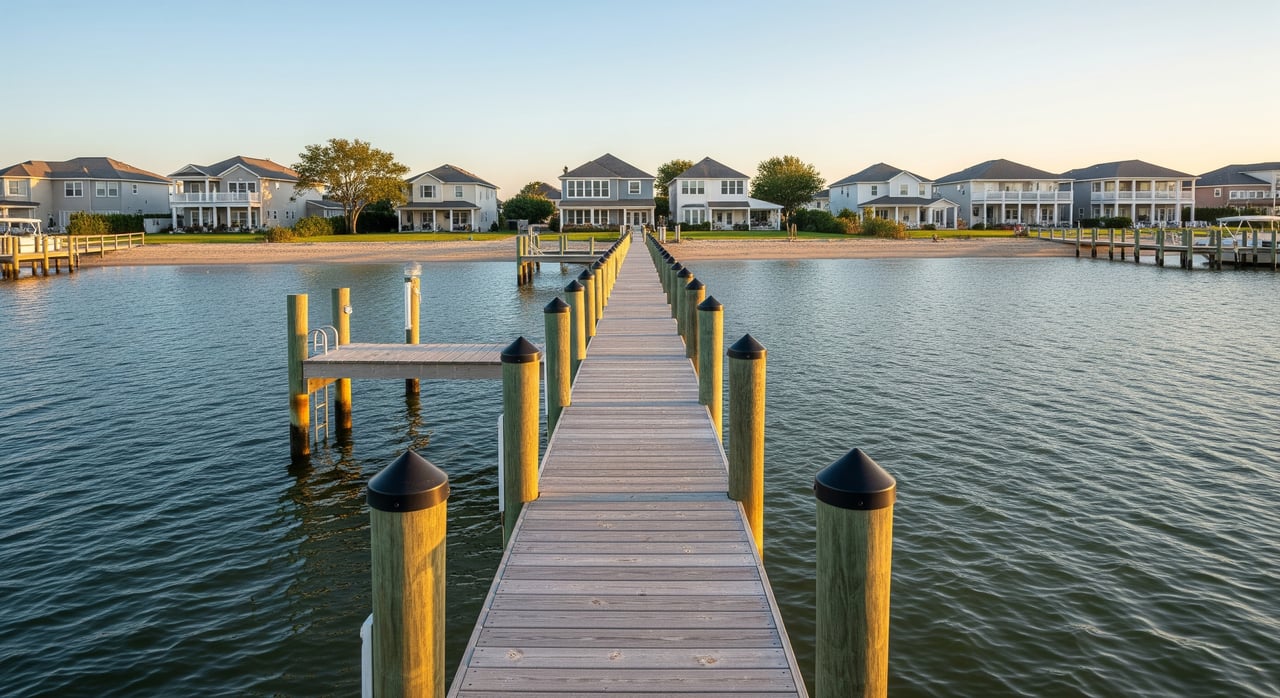
Planning to bring a yacht or sportfisher to Abaco? If you are considering a Marsh Harbour waterfront, the phrase “deep-water dock” can be the difference between seamless cruising and costly surprises. You want to know your vessel can enter, berth, and exit safely at low tide, with a dock built for local conditions. In this guide, you’ll learn the key terms, site factors, construction choices, and a buyer checklist to evaluate docks in Marsh Harbour with confidence. Let’s dive in.
Understanding deep-water access
“Deep water” is vessel specific. A dock that works for a 30-foot center-console might not be safe for a 60-foot motor yacht. Your goal is enough water under the keel at the lowest expected tide for your boat and approach channel.
Three terms matter most: draft, Mean Low Water (MLW), and controlling depth. Learn these and you can compare any listing or site with clarity.
Draft and clearance
- Draft is the vertical distance from your boat’s waterline to the lowest point of the hull or gear. Heavier loads increase draft.
- You need a safe margin between draft and the known depth at your dock at MLW, plus the minimum depth in the approach channel.
- For masted vessels, check air draft. This is the vertical clearance from waterline to any overhead obstruction like bridges or power lines.
Tides and MLW in the Bahamas
- MLW is the average of daily low tides and is the common reference for safe navigation and design.
- MHW is the average high tide. The difference between MHW and MLW is the tidal range.
- The Bahamas are generally microtidal to small mesotidal. Tidal ranges are relatively small compared with many temperate coasts, but you should still verify depths at MLW for the exact dock location.
Controlling depth
- Controlling depth is the minimum depth in the approach channel or berth at the referenced tidal datum, typically MLW.
- Safe access depends on the shallowest spot between open water and your dock. One bar or shoal controls your route.
- For buyers, ask for the reported depth at the dock at MLW and the controlling depth for the channel, plus the source and date of measurement.
Marsh Harbour site factors to know
Marsh Harbour offers access to the Atlantic through marked channels and protected basins, but depth varies across the area. Waterfronts fronting established harbors or marked channels often have better access than lots on shallow flats or mangrove creeks.
Shoaling can change depths over time, especially near inlets and in protected lagoons. Channels may require periodic monitoring and sometimes dredging to remain navigable. Wind-driven set, strong currents, and storm surge can create temporary access issues even with small tidal ranges.
Abaco is hurricane prone. Storms can destroy or displace docks, produce extreme surge, and create debris hazards. Any waterfront evaluation should consider exposure, historical damage, and how the structure is designed to perform in severe weather.
Sensitive habitats like mangroves, seagrass beds, and coral communities are common. Dredging, fill, or construction in these areas often requires approvals and may involve environmental assessments and mitigation. Expect oversight from Bahamian agencies and local planning bodies.
Dock types that work in Abaco
The best dock for your property depends on depth, seabed conditions, wave exposure, and vessel type. In Marsh Harbour, you will typically see one of three approaches.
Fixed pile-supported docks
Fixed docks are built on piles with a deck above the water. They suit firm seabeds and moderate exposure and can carry heavier loads. If elevated above expected surge, they offer better resilience to water level changes.
The tradeoff is storm vulnerability. Fixed docks can suffer damage or be lost in extreme surge and wave events unless designed for high storm loads.
Floating docks
Floating docks rise and fall with the tide. Their buoyant modules or pontoons are secured with pile guides or anchoring systems. They are convenient for stepping onto vessels because they match freeboard, and modular designs can be removed or replaced more easily after storms.
In exposed locations, floating systems need careful design to limit wave damage. Anchors, chains, and connections should be sized and inspected for local conditions.
Hybrid designs
Hybrid docks pair a fixed access walkway with floating fingers for berthing. This setup can work well where a fixed approach is needed but vessel boarding benefits from a floating interface.
Materials that resist tropical marine conditions
Warm saline waters accelerate wear. Choosing materials that hold up in Abaco’s climate reduces lifecycle costs.
- Treated timber: Traditional and economical but requires vigilant maintenance. Watch for rot and marine borers.
- Tropical hardwoods: Naturally durable in some species. Availability, cost, and sustainability must be weighed.
- Concrete: Durable for piles, caps, and decking. High upfront cost and heavier equipment needs.
- Steel: Strong and often cost-effective when protected with coatings and cathodic protection. Corrosion control is essential.
- Aluminium: Lightweight and corrosion resistant for gangways and some framing. Common on floating systems.
- Composite decking: Low maintenance and rot resistant. Monitor for UV effects and marine growth.
- HDPE/polyethylene modules: Common for floating pontoons. Require robust anchoring and protection from impact.
For fasteners and fittings, use marine-grade stainless steel 316 or properly coated hardware, and isolate dissimilar metals to reduce galvanic corrosion. Regular inspections and protective coatings help extend service life.
Fendering, cleats, and utilities
A well-equipped dock protects your vessel and supports daily operations. Confirm the hardware and services available at the slip.
- Fendering should suit the hull form and size, especially for sportfishers and larger yachts.
- Cleats, bollards, and pile guides must be properly sized and secured.
- Shore power should be marine grade with GFCI protection and safe connections.
- Water and fuel systems should include spill prevention and, where required, double-walled components and proper containment.
Hurricane resilience and planning
Design and preparation make a meaningful difference during storm season. In Marsh Harbour, consider a layered approach.
- Engineer for uplift and lateral loads. Heavier piles, deeper embedment, and elevated elevations improve performance.
- Use breakaway sections where sensible so sacrificial parts fail before the main structure.
- Choose modular floating docks that can be removed or secured in advance of a storm when feasible.
- Keep a documented storm plan. Remove portable sections, adjust lines, haul out smaller boats, and secure loose equipment.
Insurance underwriters may require specific construction standards, maintenance records, and a storm plan. Ask sellers for prior loss history and any post-storm upgrades.
Dredging and channel maintenance
If natural depth is insufficient, dredging can create or maintain access. In the Bahamas, dredging usually requires permits, environmental mitigation, and ongoing shoal management. Costs vary by exposure, sediment type, and access to local service providers like dredgers and marine contractors.
Before you plan work, confirm regulatory requirements with the relevant Bahamian departments and local authorities. Factor dredging frequency, disposal, and maintenance into your long-term budget.
Buyer checklist for Marsh Harbour docks
Use this list when evaluating a listing or commissioning a survey.
- Reported depth at the dock at MLW and the source of measurement.
- Minimum controlling depth for the access channel and the distance to a navigable channel or open ocean.
- Dock type: fixed, floating, or hybrid. Note primary materials.
- Condition report and maintenance records, including last dredging date and any recent replacements.
- Hurricane history and any structural upgrades after major storms.
- Utilities at the slip: shore power specifications, freshwater, fuel access, and pump-out.
- Moorage terms: private dock or community marina, and who maintains channel depth.
- Permitting: evidence of legal permits for the dock and any dredging or fill. Ask for copies.
- Insurance requirements and any conditions set by carriers.
- Air draft information if you operate a masted vessel.
Depth guidance by vessel type
These are illustrative ranges. Always verify your exact vessel’s draft, add a safety margin, and confirm MLW depths with current data.
- Small center-console or flats boat: often workable with 2 to 3 feet of draft clearance at MLW.
- Sportfisher 30 to 50 feet: commonly needs roughly 3 to 6 feet at MLW depending on load and gear.
- Motor yachts 40 feet and up: frequently require 4 to 8 feet or more at MLW, with direct access to marked channels.
- Sailboats and catamarans: verify both draft and air draft for masts and rigging.
Request an up-to-date depth survey from the seller or engage a local marine surveyor. Depths can change with shoaling and storms, so recent measurements matter.
Local steps to verify deep-water access
Confirming deep-water status in Marsh Harbour is a team effort. Here is a practical sequence.
- Specify your vessel’s draft, air draft, and acceptable minimum depth at MLW with a safety margin.
- Ask the seller for documented dock depth at MLW, channel controlling depth, and measurement dates.
- Hire a local marine surveyor to validate depths and inspect the dock structure and hardware.
- Consult a licensed marine contractor about construction, materials, and any needed upgrades.
- Speak with the local harbormaster or marina manager about shoaling trends and maintenance routines.
- Confirm permit status with the appropriate Bahamian planning and marine authorities, especially for any prior dredging.
- Review insurance requirements and request prior loss history and maintenance records.
Community fit and cruising logistics
Properties fronting navigable channels or established harbors are more likely to meet expectations for larger yachts and serious sportfishing. Lots on shallow flats or mangrove shorelines can be perfect for flats boats, paddle craft, and day cruising but may require significant investment to support deeper draft vessels.
Consider proximity to fuel, provisioning, repair services, and the time needed to reach the Atlantic if offshore fishing and cruising are part of your plan.
Work with a trusted local adviser
A deep-water claim should be backed by measurements, permits, maintenance records, and a clear storm plan. If you are evaluating or marketing a Marsh Harbour waterfront, precise language and current documentation build confidence and protect your investment.
If you would like tailored guidance on Abaco waterfronts, private consultations, and end-to-end coordination that fits your goals, connect with My Bahamas Realtor Limited. Our boutique, concierge approach is built for discerning buyers and sellers who value clarity and seamless execution.
FAQs
What does “deep-water dock” mean in Marsh Harbour?
- It means the controlling depth at MLW safely exceeds your vessel’s draft with a margin, and the approach channel maintains that depth from open water to your berth.
How do I confirm dock depth at low tide?
- Request documented MLW measurements and the measurement source, then hire a local marine surveyor to verify both the berth and the controlling depth in the approach channel.
Do I need permits to rebuild or dredge?
- Very likely. Expect approvals from Bahamian planning and marine authorities and possible environmental assessments, especially near mangroves, seagrass, or coral.
Who maintains the access channel depth?
- It varies. Maintenance responsibility can rest with the private owner, an HOA, or a marina operator, so confirm the documents and any community obligations.
How do hurricanes affect docks in Abaco?
- Hurricanes bring surge, waves, and debris that can damage or remove docks. Resilient design, documented storm plans, and insurance requirements help reduce risk.
Which dock type is best for my vessel?
- It depends on exposure, seabed, and your boat. Fixed docks suit heavier loads and stable conditions, while floating or hybrid systems can improve boarding and storm flexibility.
What ongoing costs should I plan for?
- Budget for routine inspections, hardware and decking replacements, possible dredging or shoal management, and insurance that reflects construction and storm mitigation.