Thinking about a lock-and-leave Caribbean home you can also rent out when you are not there? If you live in Delaware’s coastal communities or anywhere stateside, The Reef at Atlantis on Paradise Island often lands on the short list. You want clear answers on what you actually own, how the hotel program works, and what costs to expect. This guide breaks it down in plain language so you can move forward with confidence. Let’s dive in.
What you own at The Reef
When you buy at The Reef, you purchase a deeded condominium unit within the Atlantis resort footprint. Your title is conveyed by deed and governed by Bahamian condominium law and the building’s by-laws, just like other condo purchases in The Bahamas. Standard conveyancing steps apply, including stamping and recording with the Registry of Records. You should confirm these legal steps and closing formalities with local counsel, which are outlined in the Bahamas real estate practice guide for buyers and sellers.
Every unit is subject to a Unit Management Agreement, often called a UMA. Under the UMA, the Atlantis operator provides front-desk services, housekeeping, check-in, access control and related services. That means you do not run a private hotel business yourself. The operator manages reservations and guest services under the hotel program. You can review how the UMA underpins the condo-hotel model in the Reef prospective purchaser brochure that summarizes the program in detail.
Owners at The Reef also benefit from resort access and owner-focused services that are typically promoted in sales materials, such as owner concierge and owners-only areas. Treat these as features to verify in your specific purchase documents so you know what is contractual versus promotional.
Unit types and amenities
Common floor plans
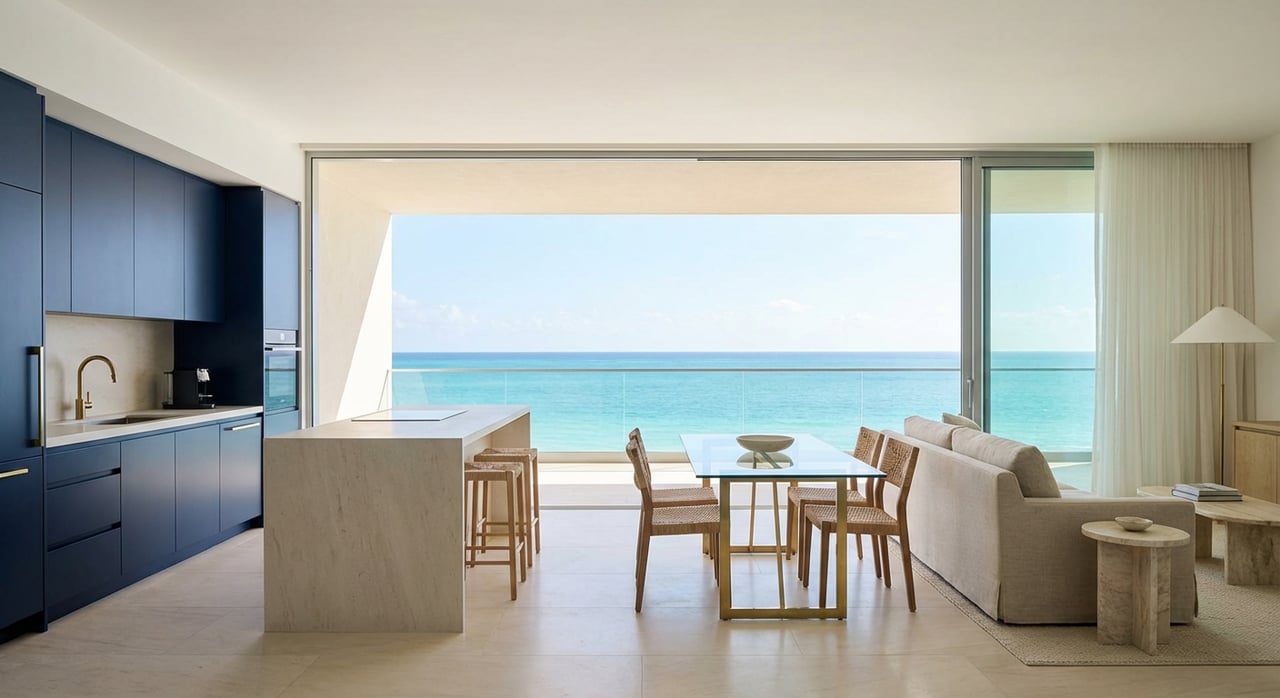
You will see several floor plan types at The Reef. Junior suites, often around 520 to 550 square feet, usually include a kitchenette and flexible sleeping. One-bedroom residences commonly run about 900 to 1,000 square feet, with some layouts offering two baths. Larger two-bedroom and combined residences exist and can reach well into seven-figure price points depending on size, view and condition. These ranges are based on recent market examples referenced in the research and are useful for ballpark planning.
Amenity access
The Reef positions itself as a residential-style tower inside the broader Atlantis experience. As an owner, you can generally access the resort’s amenities, which include pools, the waterpark, marina, dining, spa and more. Confirm which benefits are included in your owner status and which require separate passes or fees so you understand your ongoing experience and costs before you buy.
The condo-hotel model explained
Owner use vs hotel inventory
The Reef is designed to function as part of the resort’s hotel inventory. The Reef brochure describes a Bahamian requirement that condo-hotel units remain in the resort’s general rental inventory for most of the year, with the brochure referencing a nine-month minimum. Owner personal use is typically capped at about three months, and advance notice rules apply for guaranteed dates. Always confirm the current UMA and any Rental Program Agreement, since operators can update commercial terms over time. You can find these owner-use concepts summarized in the Reef prospective purchaser materials.
Rental program economics
If you enroll your unit in the Atlantis rental program, expect the operator to set retail rates, manage bookings and use a rotational system across enrolled units. The Reef brochure describes the historic fee structure this way: taxes and levies are deducted first, then a 10 percent management fee is charged on rental income. The remaining balance is split 50-50 between operator and owner, with the owner’s share reduced by a 5 percent reserve for contents and repairs. Owners typically receive monthly statements detailing activity. Review the current program documents for the precise structure and renewal terms because they can change.
What drives net returns
The headline split is only a starting point. Your net outcomes depend on occupancy, average daily rate, seasonality, housekeeping and other charges, plus your association fees and any special assessments. Ask for the actual historical rental statements and occupancy and ADR data for the specific unit you are considering. The Reef brochure notes that monthly statements are issued, which makes document-based review straightforward once provided.
Costs, taxes and registrations
Transfer VAT and closing costs
Transfers of Bahamian real property are subject to VAT. For non-Bahamian purchasers, current practice generally applies a 10 percent VAT rate on conveyances, which is a major closing cost to budget. Who pays what at closing can be negotiated between buyer and seller, but VAT must be paid and the deed stamped before recording. Plan for legal fees, potential broker commissions, searches, and recording fees in addition to VAT.
Real property tax and condo-hotel tax
Annual real property tax applies, and condo-hotel units enrolled in a rental pool can be subject to a condo-hotel tax that is calculated as 75 percent of the residential property tax rate on the assessed value. In some cases, if the VAT collected from renting a unit exceeds the condo-hotel tax, the condo-hotel tax may not be due. This interaction is technical and should be confirmed with your adviser.
Exchange Control and Investments Board
Foreign buyers typically need either a Certificate of Registration for single-family residential purchases or an International Persons Landholding Permit in other cases. The certificate or permit is attached to the deed when recorded. Proper Exchange Control registration is also important because it supports repatriation of sale proceeds in your original currency when you eventually sell. Your local counsel will advise which option applies to your transaction.
Insurance and hurricane planning
Insurance is a meaningful line item in The Bahamas. You should request quotes that show premiums and deductibles for wind, flood and contents coverage before you commit. Many owners focus on impact-rated windows and clear hurricane procedures with the operator or property manager. Understanding insurance terms upfront helps you avoid surprises in your investment return and carrying costs.
Ongoing carrying costs
Association fees at The Reef vary widely by unit size and building statements. Recent listing examples show a range from roughly 1,200 dollars to more than 3,700 dollars per month. Add utilities, contents insurance, and any resort-related fees that apply under the UMA or rental program to build a realistic annual budget.
For more on VAT, permits and tax treatment, consult the Bahamas practice guide for real estate purchasers and owners.
Market context and diligence
Atlantis is the anchor resort on Paradise Island, and broader resort upgrades can influence demand, occupancy and rates that flow through to condo-hotel pools. Recent local reporting highlights ongoing capital investment in the resort ecosystem, which is useful context when you estimate rental potential and mid-term performance.
Due diligence checklist
Request these items before you make an offer:
- Condominium declaration, by-laws, rules and any house rules, including voting rights and restrictions.
- The current UMA and any rental program agreement, including owner-use rules, renewal and termination language.
- Association operating budget, year-to-date financials, reserve study, recent meeting minutes and any special assessment history.
- Historical monthly rental statements and occupancy and ADR data for the subject unit and comparable units.
- Evidence of proper VAT stamping of prior conveyances and the status of Investments Board and Exchange Control filings, if applicable.
- Building and unit insurance summaries showing coverages, premiums and deductibles.
Smart questions to ask
- Is the unit currently enrolled in the Atlantis rental program? Provide the last three years of gross and net results with monthly statements.
- What are the exact revenue splits, fees and reserve contributions under the current rental program for this unit type?
- Are any capital works planned at The Reef or across Atlantis that could affect near-term availability, rates or noise conditions?
- What special assessments have been levied in the last five years, and are any proposed?
Common red flags
- Missing or unsigned UMA or rental agreement for a unit advertised as hotel-inventory ready.
- No rental history or only pro forma numbers available for review.
- Unpaid condo assessments or unclear association financials.
- Gaps in VAT stamping or missing permit or certificate for a prior foreign-buyer transaction.
Next steps
If you are serious about The Reef, approach it like a resort investment wrapped in a deeded condo. Get the UMA and rental program documents early, ask for real historical statements, confirm closing taxes and registrations with counsel, and obtain insurance quotes that state premiums and deductibles. When you are ready to compare units, we can help you assemble the documents, coordinate local legal and tax introductions, and model realistic carrying costs and net outcomes.
If you want a private, hands-on walkthrough tailored to your goals, connect with My Bahamas Realtor Limited to schedule a private consultation.
FAQs
What does Reef ownership mean compared to a typical Bahamas condo?
- You own a deeded condo subject to by-laws plus a Unit Management Agreement that puts your residence into the Atlantis-operated condo-hotel system, where the operator handles reservations, check-in and housekeeping.
How much personal use do Reef owners typically get each year?
- The Reef brochure describes a model where units stay in hotel inventory about nine months a year, with owner use around three months and advance notice rules for guaranteed dates; always verify the exact limits in the current UMA and rental program materials.
How are rental revenues typically split at The Reef?
- The Reef brochure outlines a structure where taxes and levies are deducted, a 10 percent management fee applies, then the remaining balance is split 50-50, with a 5 percent reserve taken from the owner’s share; confirm current terms in your contract.
What taxes and registrations apply to a foreign buyer closing at The Reef?
- Expect VAT on the conveyance, commonly at 10 percent for non-Bahamians, plus either a Certificate of Registration or an International Persons Landholding Permit and Exchange Control registration for future repatriation.
What ongoing costs should I budget for a Reef residence?
- Plan for association fees that can range from about 1,200 dollars to more than 3,700 dollars per month depending on unit size, plus utilities, contents insurance, and any resort-related fees under the UMA or rental program.